
Share Russell Billiu Long's obituary with others.
Invite friends and family to read the obituary and add memories.
Stay updated
We'll notify you when service details or new memories are added.
You're now following this obituary
We'll email you when there are updates.
Select your format and elements to print

IN LOVING MEMORY OF Russell Billiu Long
Russell Billiu
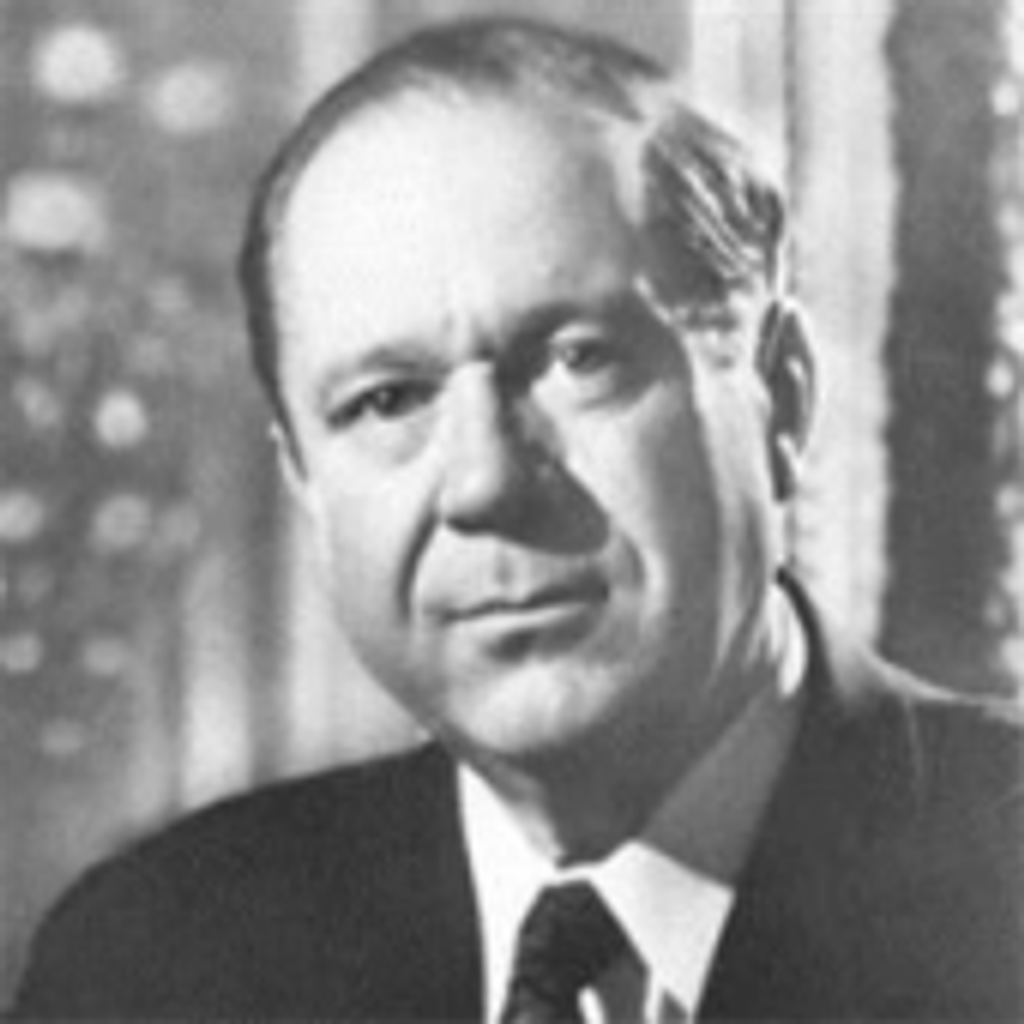
Long
November 3, 1918 — May 9, 2003
Russell Billiu Long's Obituary
Russell Billiu Long (November 3, 1918 – May 9, 2003) was an American Democratic politician and United States Senator from Louisiana from 1948 until 1987, and chairman of the Senate Finance Committee for fifteen years from 1966 to 1981. The son of future Louisiana governor and US senator Huey Long and his wife Rose McConnell Long, also a future US senator, Long was born in Shreveport, and received bachelor's and law degrees from Louisiana State University in Baton Rouge, where he was a member of Delta Kappa Epsilon fraternity (Zeta Zeta chapter). During college, he served as freshman class president, sophomore Arts and Sciences President, and then student body president. In June 1942, World War II, Long entered the naval reserve and completed his service as a Lieutenant in December 1945. Before he ran for the Senate, Long had served as executive counsel to his uncle, Earl Kemp Long, who returned to the governorship in 1948. Long's first and only elected position was in the U.S. Senate. Elected to the Senate on November 2, 1948, he became the only person in U.S. history to be preceded in that institution by both his father and his mother. He was elected one day before his 30th birthday, and took office on December 31, thus barely meeting the Constitutional requirement that all Senators be at least 30 years old upon taking office. Because he had filled a vacancy, he gained a few days of seniority over others in the Senate class of 1948, including Lyndon B. Johnson and Hubert Humphrey, whose terms began January 3, 1949. Defeating Kennon and Clarke, 1948 Main article: United States Senate elections, 1948 To win the Senate seat vacated by the death of Democrat John Holmes Overton, Long first defeated Judge Robert F. Kennon of Minden in the Democratic primary, 264,143 (51 percent) to 253,668 (49 percent). The margin was hence 10,475 votes. Long then overwhelmed Republican oilman Clem S. Clarke of Shreveport, 306,337 (75 percent) to 102,339 (25 percent). Clarke was the first Louisiana Republican U.S. Senate nominee under the implementation of the Seventeenth Amendment to the United States Constitution in 1914. He carried Iberia, Caddo (Long's native parish), Lafayette, and East Baton Rouge parishes. Clarke had tried to get the courts to forbid Long from running on both the Harry Truman and Strom Thurmond slates in Louisiana, but he failed to convince the judges, and Long's votes on the Truman and Thurmond slates were counted. Harvey Locke Carey of Shreveport was Long's campaign manager for northwest Louisiana. Later, he was the short-term U. S. Attorney for the United States District Court for the Western District of Louisiana. Senate career Specialist on tax law Long was known for his knowledge of tax laws. In 1953, he began serving as an influential member of the tax-writing Senate Finance Committee and was the chairman from 1966 until Republicans assumed control of the Senate in 1981. During his time in the Senate, Long was a strong champion of tax breaks for businesses, once saying, 'I have become convinced you're going to have to have capital if you're going to have capitalism.' On the other hand, he was aware of some of the political ramifications of 'tax reform,' stating that it simply meant 'Don't tax you, don't tax me, tax that fellow behind the tree!' Long's contributions to the United States' tax laws include the Earned Income Tax Credit, a program aimed at reducing the tax burden on poor working families, the Child Support Enforcement Act, and employee stock ownership plans (ESOPs), employee benefit plans designed to allow employees to invest in the stock of their employers. In the year 2006, the Earned Income Tax Credit lifted more than four million people above the poverty line and was called "the nation's most effective antipoverty program for working families." Long also initiated the provision that allows a taxpayer to allocate $1 of taxes for a Presidential election campaign fund checkoff (the 'dollar checkoff'). Democratic senators named him the party Assistant Majority Leader (whip) in 1965. He lost this leadership position in 1969 to Edward M. Kennedy of Massachusetts, but remained as chairman of the Senate Finance Committee. He had especially good relations with both of his senatorial colleagues from Louisiana, first Allen J. Ellender of Houma, an old associate of Huey Long, and, then, J. Bennett Johnston, Jr., a former member of both houses of the Louisiana State Legislature, who like Long was born in Shreveport. Senator Long confers with Lyndon B. Johnson in this undated photo In 1966, at the request of former National Football League Commissioner Pete Rozelle, Long and Congressman Hale Boggs used their influence to pass legislation that allowed for the merger of the American Football League and the National Football League (NFL). Without the legislation, the merger would have been prohibited by anti-trust laws governing monopolies. In exchange for ensuring the passage of the legislation, Long and Boggs requested that Rozelle award the next NFL expansion franchise to New Orleans. Rozelle complied, and Long and Boggs joined Rozelle in announcing that New Orleans had obtained the New Orleans Saints on November 1, 1966. Mr. Long's success in maneuvering Kennedy's major tax reduction bill forward in early 1964 cemented his reputation as a rising leader. Long served as President Lyndon B. Johnson's legislative Senate floor leader for many of the Great Society programs. Through his position on the Senate Finance Committee, he was instrumental in building support for the passage of the Tax Reform Act of 1986. After his election in 1948, Long never again faced a close contest for reelection. Because the 1948 election was for a two-year unexpired term, Long had to run again in 1950 for his first full six-year term. That year, he had no trouble defeating the intraparty challenge of Malcolm Lafargue,[9] a great-nephew of Senator John Overton who stepped down as U.S. Attorney for the United States District Court for the Western District of Louisiana in Shreveport to make the Senate race. In an advertisement, Lafargue questioned how Long is the self-proclaimed 'poor man's friend' because the incumbent 'pretends to sneer at millionaires, but Long is a millionaire himself.' Mayor deLesseps Story Morrison of New Orleans formally endorsed Lafargue in the primary against Long, but the move was a smokescreen. Morrison had struck a deal with his intraparty rival, Governor Earl Long, that he would not oppose Russell Long for a full term in the Senate if Earl Long would agree to restoration of home rule for New Orleans. The city was at the time was virtually being governed from Baton Rouge. Though Morrison endorsed Lafargue, he privately urged his followers to support Russell Long. After he dispatched Lafargue and former U.S. Representative Newt Mills from Louisiana's 5th congressional district, Long overwhelmed his Republican opponent, Charles Sidney Gerth (1882-1964) a businessman from New Orleans, who had also run for senator in 1948 against Long's colleague, Allen J. Ellender, but as a Democrat. In the 1950 general election, Long polled 220,907 (87.7 percent) to Gerth's 30,931 (12.3 percent).
Russell Billiu Long's Guestbook
This site is protected by reCAPTCHA and the
Google Privacy Policy and Terms of Service apply.
Service map data © OpenStreetMap contributors