
Share Dr. Carl Austin Weiss Sr.'s obituary with others.
Invite friends and family to read the obituary and add memories.
Stay updated
We'll notify you when service details or new memories are added.
You're now following this obituary
We'll email you when there are updates.
Select your format and elements to print

IN LOVING MEMORY OF Dr. Carl Austin Weiss Sr.
Carl Austin
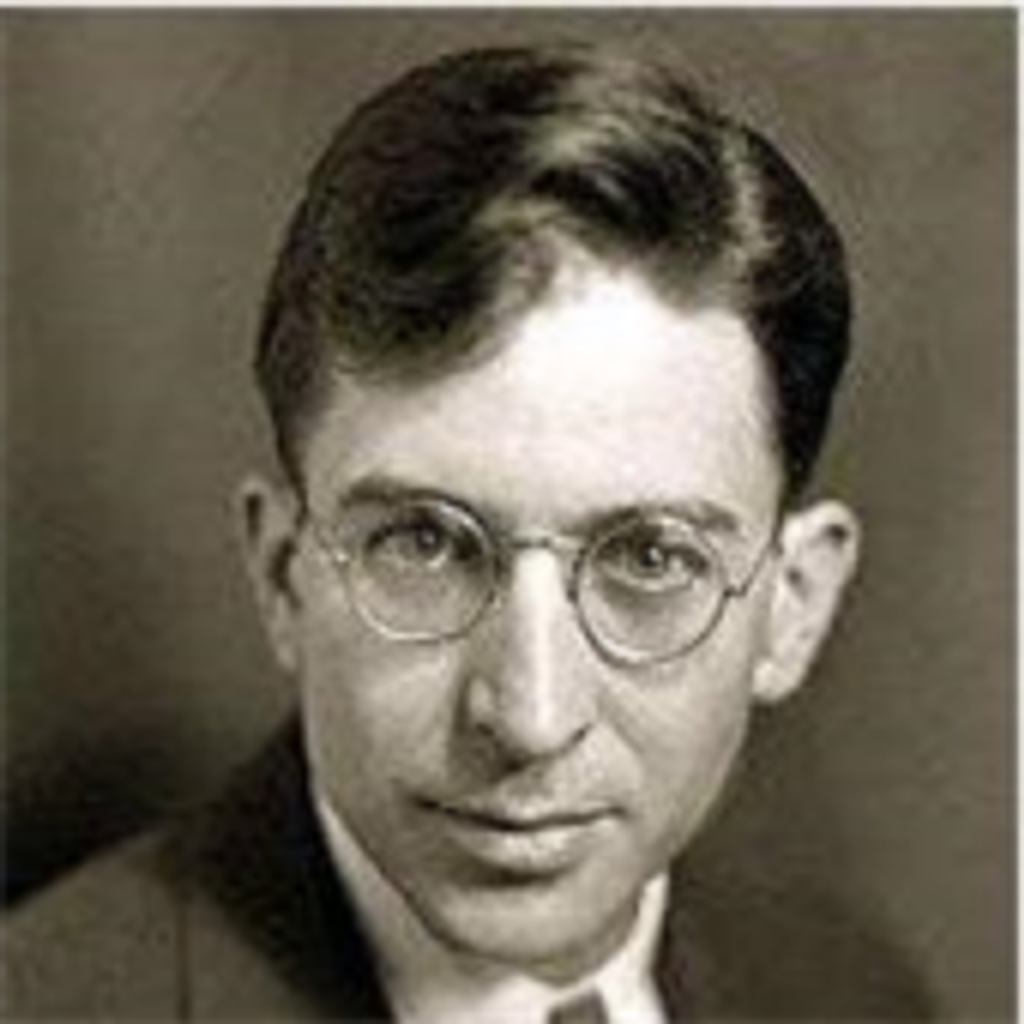
Weiss Sr.
December 6, 1906 — September 8, 1935
Dr. Carl Austin Weiss Sr.'s Obituary
Carl Austin Weiss, Sr. (December 6, 1906 – September 8, 1935), was an American physician from Baton Rouge, Louisiana, who assassinated U.S. Senator Huey Pierce Long, Jr., at the Louisiana State Capitol on September 8, 1935. Baton Rouge doctor Weiss was born in Baton Rouge to Carl Adam Weiss, M.D., and the former Viola Maine. Weiss's father was a prominent eye specialist who had once treated Senator Long. Weiss was educated in local schools and graduated as the valedictorian of St. Vincent's Academy.[citation needed] He then obtained his bachelor's degree in 1925 from Louisiana State University in Baton Rouge. He did postgraduate work in Vienna, Austria, and was thereafter awarded internships in Vienna and at Bellevue Hospital in New York City. In 1932, he returned to Baton Rouge to enter private practice with his father. He was president of the Louisiana Medical Society in 1933 and a member of the Kiwanis International (Conrad 1988, 2:831). The Pavy-Opelousas connection In 1933, Weiss married Yvonne Louise Pavy of Opelousas, the seat of St. Landry Parish. The couple had one son, Carl Austin Weiss, Jr., who was born in 1934, shortly before the elder Weiss' death. Pavy was the daughter of Judge Benjamin Henry Pavy (1874–1943) and Ida Veazie (died 1941). The Pavy family was part of an anti-Long political faction. Judge Pavy's brother Felix Octave Pavy (1879-1962), a physician in Leonville and Opelousas, had run for lieutenant governor in 1928 on an intraparty ticket, and had been defeated by Paul N. Cyr, a Jeanerette dentist who was endorsed by Long. Similarly, Judge Pavy, Weiss' father-in-law, was the Sixteenth Judicial District Court state judge from St. Landry and Evangeline parishes. He did not seek reelection in 1936, after Long had the legislature gerrymander the seat to include a majority of pro-Long voters within a revised district.(Conrad 1988, 2:635). Murder of Huey Long On Sunday, September 8, 1935, Weiss confronted and shot Huey Long in the Capitol building in Baton Rouge. In response, Weiss was cornered and shot 62 times by Long's bodyguards. Weiss was interred at Roselawn Cemetery in Baton Rouge. As measured by the number of mourners, Weiss's funeral is believed to have been the largest ever held for an accused political assassin in the United States. Family denials At the time, Weiss's wife and their families accepted his guilt, though Weiss' parents indicated that Weiss had seemed quite happy earlier on the day that Long was killed. Weiss's son, Carl Weiss, Jr., an infant at the time of his father's death, has since vigorously disputed the assertion. In a 1993 interview on the NBC program Unsolved Mysteries,[5] he proffered the assertion that Long was accidentally shot by one of his own bodyguards. However, this theory has not been accepted by any scholars. Louisiana State University Professor T. Harry Williams dismissed it as wishful thinking on Weiss Jr's part. In his exhaustive, Pulitzer Prize-winning biography of Long, Williams wrote: no one had taken it very seriously, for unless all the witnesses to the event were lying or mistaken, only four shots had been fired while Huey was still in the corridor, the two from Weiss's pistol that struck Huey and Roden's wristwatch respectively and the two from the revolvers of Roden and Coleman that dropped Weiss. By the time the other guards had got their guns out and started to fire Huey had run from the scene.
Dr. Carl Austin Weiss Sr.'s Guestbook
This site is protected by reCAPTCHA and the
Google Privacy Policy and Terms of Service apply.
Service map data © OpenStreetMap contributors